

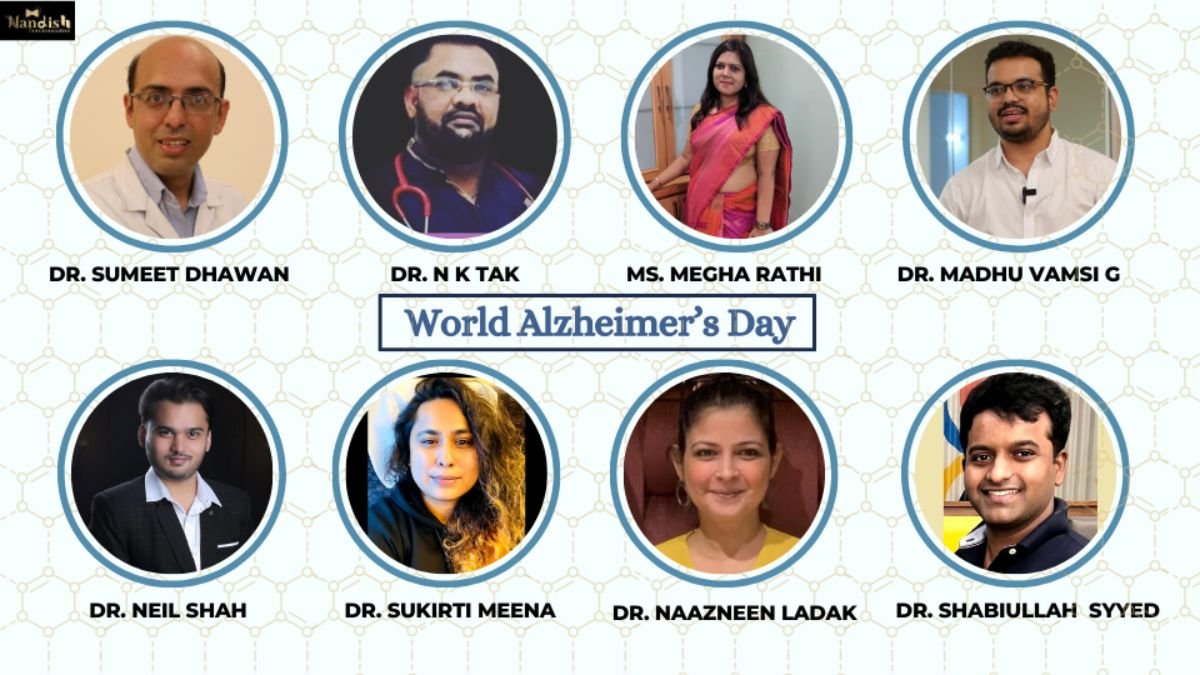
New Delhi (India), September 21: In a world where the aging population is steadily on the rise, the importance of preserving brain health has never been more paramount. World Alzheimer’s Day, observed annually on September 21st, serves as a poignant reminder of the challenges and complexities associated with cognitive decline. Alzheimer’s disease, the most common form of dementia, affects millions of lives worldwide, making it a pressing global health concern.
On this World Alzheimer’s Day, we embark on a journey to explore the invaluable insights and wisdom offered by these experts, with their deep understanding of the human mind, have dedicated their careers to unraveling the mysteries of cognitive function, memory, and mental well-being. Their collective knowledge and expertise provide a beacon of hope for those seeking guidance on how to maintain and even enhance brain health throughout their lives.
Dr. Dhawan Sumeet R, MD, DM, Neurologist and Development Behavior Speech Specialist, Apollo Clinic, Chandigarh
Preserving brain health is crucial for preventing memory loss and maintaining intellectual function as we age. A balanced approach includes a balanced diet rich in antioxidants, omega-3 fatty acids, and brain-boosting nutrients like vitamin E and B vitamins. Regular physical exercise, meditation and yoga increase blood flow to the brain. Mental stimulation through activities like puzzles, reading or learning new skills helps keep the mind sharp. Prioritizing quality sleep is essential, as it allows the brain to consolidate memories and recharge. Lastly, managing stress and maintaining strong social connections contribute to overall brain health, fostering resilience against memory loss as we journey through life. Managing diabetes, blood pressure, kidney function and liver function helps optimize brain functions and memory.
Dr. Madhu Vamsi G, MBBS, MD (Psychiatry), Consultant in Hyderabad
On this Alzheimer’s Day, it’s crucial to spotlight the behavioral problems that often accompany this disease. Alzheimer’s isn’t just about memory loss; it can profoundly impact behavior and emotions.
Common behavioral issues include agitation, anxiety, wandering, hallucinations, and sundowning. These behaviors stem from the confusion and frustration individuals with Alzheimer’s experience as their cognitive abilities decline.
As a psychiatrist, I urge understanding and patience when dealing with these behaviors. Effective communication, creating a safe environment and validation of their feelings can make a significant difference. Caregivers play a vital role in managing these challenges, and they must seek support and respite care when needed. By addressing these behavioral challenges with compassion, we can enhance the quality of life.
Ms. Megha Rathi, M.Phil, Clinical Psychology & PhD Scholar, Senior Clinical Psychologist (Gold Medalist) Caring Minds, Kolkata
Alzheimer’s disease takes away our basic right to remember. It typically occurs in old age but can also have an early onset, with risk factors being lifestyle diseases, genetic factors, and abnormalities in neurotransmitters and brain structure (prefrontal cortex, amygdala, and hippocampus). Though it’s irreversible, we can surely try to delay the worsening of symptoms with early diagnosis, pharmacotherapy, and structured neuropsychiatric rehabilitation. I would just say that let’s try to take preventive measures, as people with Alzheimer’s may forget us, but we as a society and mental health professionals ought to remember them.
Dr. Naazneen Ladak, MBBS, DPM, MS Psychiatry(USA), MSPAC(USA), Specialization in Geriatrics, Director – BHN Elder Care Centers, Consulting Psychiatrist, Mumbai
Alzheimer’s disease is a neurodegenerative process that leads to the gradual degeneration and loss of brain cells, contributing to its debilitating effects on cognition and memory. Certain brain activity in people diminishes during the early stages of dementia or Alzheimer’s. Just like we do physical activities or exercise to keep us physically healthy, one should not neglect mental health. To keep our brains working, one should keep them regularly stimulated; preserving Brain health is important to maintain cognitive junctions and also serves as an integral part of longevity. We can keep our brain healthy in the following ways: doing activities that challenge the brain, for example, brushing teeth with the opposite hand and helping stimulate the non-dominant area of the brain.
Taking up a hobby, solving crossword puzzles, playing Sudoku, or regularly reading a magazine or newspaper can help prevent Alzheimer’s disease. A change in the normal routine, like taking a different routine home or shopping at a different store. By introducing new experiences, one activates the brain. Eating brain-boosting foods like wholegrains, blueberries, broccoli, fish, and nuts.
Dr. Neil Shah, MD Psychiatry, Geeta Hospital, Jamnagiri Road, Dhule, Maharashtra
Alzheimer’s disease is a neurological condition that causes memory loss, which can sometimes be associated with behavioral disturbances. Taking care of your brain health is of utmost importance to avoid suffering from this condition later in your life. Some of the simple preventive measures that can be taken are: Engage in regular physical exercise, as it increases blood flow to your brain. Have a balanced, healthy diet consisting of green leafy vegetables, fruits, and dry fruits like walnuts. Nutritional supplements rich in omega-3 fatty acids have also proven to be effective in preventing Alzheimer’s disease.
Challenge your brain and memory by engaging in tasks such as solving puzzles, crosswords, reading books, and learning a new skill. Ensure that you have an adequate sleep of at least 8 hours as the brain cells repair themselves during sleep. Lastly, avoid physical trauma to your brain by ensuring that you wear a helmet while driving or use appropriate protective gear in activities that have the potential to cause a head injury.
Dr. N.K. Tak, MBBS, MD, FIPS, MIASM, Psychiatrist, Jaipur
Alzheimer’s disease is a degenerative disease in which there is a loss of cognitive functions such as thinking, logic, reasoning, and memory. There is emotional instability and changes in personality as well. It accounts for 50–60% of all patients with dementia. It’s generally seen in 65-year-olds and older. It is more commonly seen in females. There are various genetic (40%) and other causes leading to Alzheimer’s. So, how can we preserve our mental health? Primarily, start exercising for 30 minutes regularly; brisk walking and aerobics are most preferable. Secondly, start including foods rich in citrus, vitamin B12, vitamin A, C, and E. Thirdly, sleeping well and relaxing your body are essential. One can also mentally try to reflect on one’s day and recollect all activities done on that day to jog their memory. Avoid using your phone for an hour before going to bed. Yet, the most important and handy tool is consistently reading books to prevent dementia (forgetfulness) in the elderly.
Dr. Shabiullah Syyed, MBBS, MD (Psychiatry), WPA Young Fellowship (Germany), Consultant Psychiatrist, The Definitive Mind Clinic, Madhukar Rainbow Children’s Hospital, Continua Kids, Hygiea Hospital, New Delhi
Alzheimer’s disease is a progressive brain disorder characterized by the accumulation of certain proteins, leading to brain shrinkage and cell death, ultimately causing a decline in memory, thinking, behavior, and social skills. It is not a normal part of aging; age is a significant risk factor, with most cases occurring in individuals aged 65 and older, although early-onset Alzheimer’s can also occur. The disease advances through stages, with symptoms worsening over time. Treatments can temporarily alleviate symptoms and enhance the quality of life for both patients and caregivers. Managing behavioral changes involves maintaining a familiar environment, monitoring comfort, providing comfort objects, and using redirection while avoiding confrontation. Medications like antidepressants, anti-anxiety drugs, anticonvulsants, and antipsychotics may help manage specific symptoms. Additionally, adopting a mentally, physically, and socially active lifestyle, along with a healthy diet, can reduce the risk of Alzheimer’s. On World Alzheimer’s Day, it’s essential to dispel misconceptions about the condition and seek early help from a Psychiatrist when needed.
Ms. Sukirti Meena, M.A Applied psychology, Psychologist registered at NCS (Ministry of Labour & Employment), Tokyo Meguro counselling, Jaipur
Self-awareness can help improve our brain health. Self-awareness is a useful skill for determining negative thought patterns and behavioral attributes responsible for our overall health and well-being. Self-awareness helps improve our psychosocial-cognitive skills like decision-making, organizing daily activities, maintaining healthy relationships, and developing a positive attitude towards new life experiences. Self-help exercises like yoga, meditation, mindfulness practices, etc. can boost self-awareness and help us relax and rejuvenate. In contrast to traditional practices, NSDR (nonsleep deep rest) has been found to be an effective therapy for optimizing brain health.
Based on the concepts of hypnosis and yoga nidra, NSDR is an audio-visual therapy aid that helps an individual experience deep rest without falling asleep. To reduce the risk factors responsible for chronic diseases and psychological disorders and to maintain a healthy lifestyle, it is recommended to practice any of these self-help exercises and mindfulness-based therapies for a better quality of life.
Dr. Dhawan Sumeet R, MD, DM, Neurologist and development behavior speech specialist, Apollo Clinic Chandigarh
Preserving brain health is crucial for preventing memory loss and maintaining intellectual function as we age. A balanced approach includes a balanced diet rich in antioxidants, omega-3 fatty acids, and brain-boosting nutrients like vitamin E and B vitamins. Regular physical exercise, meditation and yoga increase blood flow to the brain. Mental stimulation through activities like puzzles, reading or learning new skills helps keep the mind sharp. Prioritizing quality sleep is essential, as it allows the brain to consolidate memories and recharge. Lastly, managing stress and maintaining strong social connections contribute to overall brain health, fostering resilience against memory loss as we journey through life. Managing diabetes, blood pressure, kidney function and liver function helps optimize brain functions and memory.
If you have any objection to this press release content, kindly contact pr.error.rectification[at]gmail.com to notify us. We will respond and rectify the situation in the next 24 hours.
