

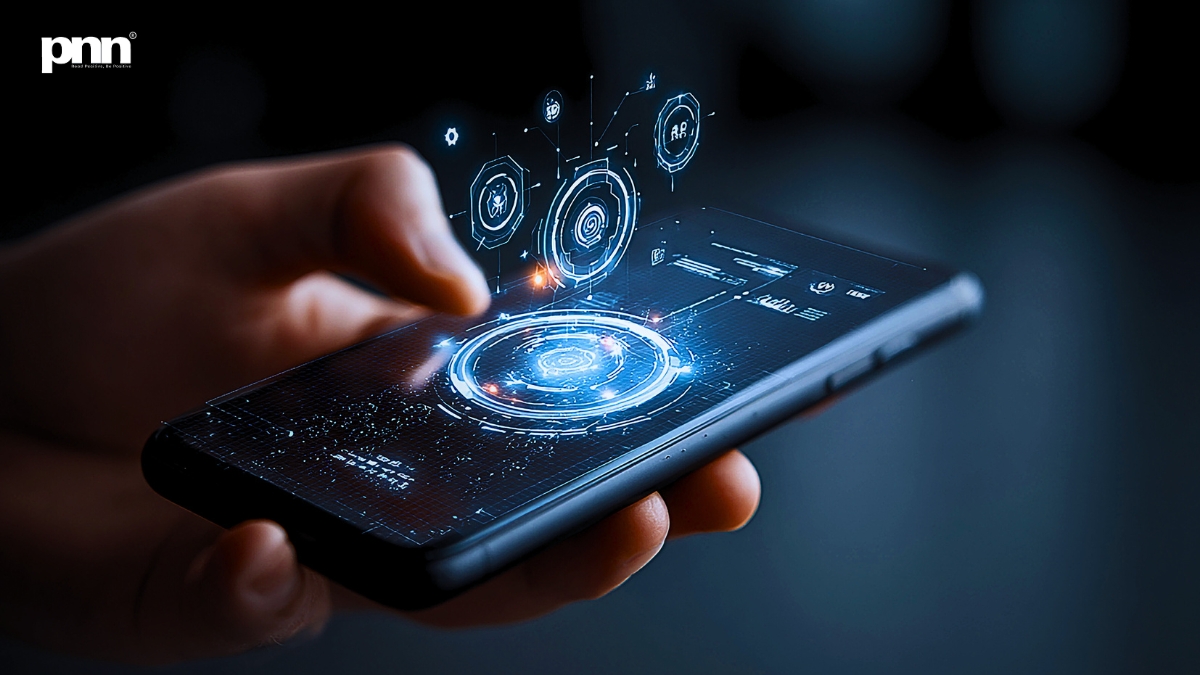
Mumbai (Maharashtra) [India], December 13: There was a time when a new smartphone launch felt like a technological event. Faster chips. Sharper screens. Cameras that actually justified the upgrade. That era is over — quietly, awkwardly, and without a farewell keynote.
Global smartphone sales have flattened. In some regions, they’ve declined. Not collapsed, not vanished — just stalled in that uncomfortable middle zone where consumers stop caring enough to replace what already works. Screens are good. Cameras are great. Performance is overkill for most daily tasks. The glass rectangle has reached adulthood.
So the industry did what mature industries always do when novelty runs out:
it changed the narrative.
Enter on-device AI — the new miracle, the new excuse, the new reason your perfectly fine phone is suddenly “outdated.”
This shift didn’t happen because consumers demanded it. It happened because manufacturers needed a story that could survive another product cycle without admitting the obvious: innovation has become incremental, and hardware differentiation is running on fumes.
Artificial Intelligence features now headline launch events:
-
Generative photo editing
-
Real-time voice summarisation
-
Predictive text that finishes your thoughts before you finish your coffee
-
Assistants that promise to be proactive, personal, and somehow less annoying than their predecessors
On paper, it sounds like progress. In practice, it feels like a very polished attempt to restart excitement in a market that already knows the trick.
The Economic Reality Nobody Hides Anymore
The numbers tell the story clearly — and unromantically.
Global smartphone shipments have hovered around 1.2 billion units annually, a far cry from the growth years when upgrades were driven by tangible leaps. Replacement cycles have stretched to three to four years in many mature markets. Consumers aren’t resisting innovation; they just don’t see enough reason to pay for it.
Meanwhile, phone manufacturers are spending billions annually on Artificial Intelligence development, silicon optimisation, and partnerships to make sure intelligence — not hardware — becomes the new value proposition.
It’s not a pivot born of creativity.
It’s one born of necessity.
The upside (Because PR Departments Insist It Exists)
To be fair, on-device Artificial Intelligence does offer real advantages:
-
Local processing improves speed and reduces reliance on the cloud.
-
Battery efficiency is improving as Artificial Intelligence tasks move off servers and onto specialised chips.
-
Personalisation is finally becoming useful rather than creepy — at least on good days.
-
Accessibility features powered by Artificial Intelligence genuinely improve usability for millions.
This is not fake innovation. It’s contextual innovation — quieter, less visible, but often more practical than flashy hardware changes.
And from a privacy standpoint, on-device processing can be a win. Data that never leaves your phone doesn’t need to be defended in someone else’s data center.
That’s the optimistic version. Now let’s adjust the lighting.
Are AI Phones Smarter — or Just Louder?
The problem isn’t AI. It’s expectation management.
Most so-called “AI features” are refinements of tools that already existed:
-
Better auto-enhance
-
Smarter suggestions
-
Slightly less robotic assistants
Useful, yes. Revolutionary? Hardly.
Marketing language, however, suggests something closer to a cognitive leap. Phones are framed as thinking companions rather than tools — a subtle but important psychological shift designed to justify upgrades without changing form factors.
In reality, many Artificial Intelligence features are software-locked and could run on older devices if incentives aligned differently. Hardware requirements are real, but not always as rigid as advertised.
Which leads to the uncomfortable suspicion that Artificial Intelligence is being used not only to innovate — but to segment.
Privacy: The Terms Nobody Reads, Again
On-device Artificial Intelligenceis sold as privacy-friendly, and technically, it can be. But consumers still face trade-offs they rarely examine:
-
AI models trained on usage patterns require consent that’s easy to grant and hard to understand.
-
Hybrid processing models quietly shift some tasks back to the cloud.
-
Voice, image, and behavioral data are increasingly valuable — even when anonymized.
-
Artificial Intelligence assistants blur the line between helpful inference and persistent observation.
None of this is illegal. Most of it is disclosed. Almost none of it is meaningfully read.
The result is a familiar pattern:
convenience wins, clarity loses, and trust becomes conditional.
The Illusion of Innovation in Mature Markets
Smartphone innovation hasn’t stopped. It’s just become invisible.
There are no dramatic leaps left — only refinements, efficiencies, and optimisations. Artificial Intelligence fits perfectly into that environment because it’s intangible. It feels new without requiring new hardware shapes, new manufacturing processes, or new consumer behavior.
But that also makes it easier to oversell.
When innovation becomes abstract, skepticism grows. Consumers start asking questions they didn’t ask before:
-
Does this actually help me?
-
Will this still work in two years?
-
Is this feature worth a higher price?
-
Or is it just another reason to lock me in?
Those questions don’t kill markets — but they do slow them.
The Strategy Beneath the Surface
AI phones aren’t just about features. They’re about ecosystems.
On-device intelligence ties users more tightly to:
-
Operating systems
-
App marketplaces
-
Cloud services
-
Subscription layers are quietly layered underneath “free” tools
This is not sinister. It’s strategic. Mature markets reward retention, not novelty.
The smartest brands aren’t selling smarter phones — they’re selling longer relationships.
Where We Are Right Now
As of late 2025:
-
AI features dominate flagship messaging.
-
Mid-range phones are adopting scaled-down versions to stay relevant.
-
Hardware upgrades are increasingly marginal.
-
Consumers are curious, cautious, and not rushing.
Sales aren’t collapsing — they’re stabilising. And in corporate terms, stability without growth is a problem that needs a story.
AI is that story.
Final Thought
Smartphones haven’t peaked because they failed.
They peaked because they succeeded too well.
Artificial Intelligence won’t restart the golden age of upgrades — but it might stretch the plateau long enough for the industry to figure out what comes next.
And until then, your phone will keep telling you how smart it is.
Whether you asked or not.
