

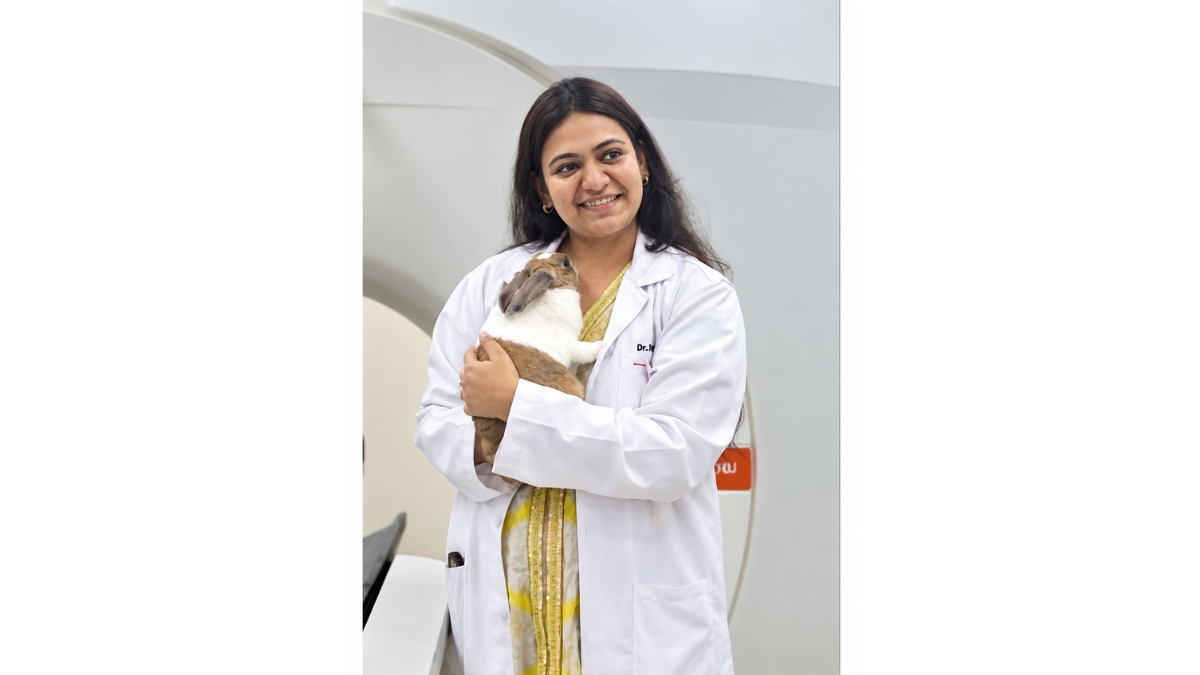
New Delhi [India], September 21: Rabbits have become increasingly popular companion animals over the last decade, thanks to their gentle temperament, intelligence and affectionate nature. Despite their growing popularity, rabbit health is often misunderstood, particularly when it comes to dental disease. Many owners assume that a rabbit refusing food is suffering from a digestive problem or temporary loss of appetite. However, one of the most common and often overlooked causes of inappetence in rabbits is underlying dental disease.
Unlike dogs and cats, rabbits possess 28 continuously growing (elodont) teeth that require constant wear through chewing coarse, fibre-rich food such as hay. When normal tooth wear is disrupted due to genetics, jaw conformation, trauma or an inappropriate diet, even a mild malocclusion can progressively develop into a painful and debilitating condition.
The earliest signs are often subtle. A rabbit may begin eating more slowly, selectively choose softer foods, drop food from its mouth, produce smaller faecal pellets, drool excessively or gradually lose weight. Some rabbits develop watery eyes or facial swellings because diseased tooth roots extend close to the nasolacrimal ducts and surrounding jaw bones. Unfortunately, rabbits are prey animals and instinctively hide signs of illness, meaning dental disease is frequently advanced before obvious clinical signs become apparent.
A thorough oral examination is always the first step, but it has its limitations. While overgrown incisors are easy to identify, the cheek teeth—where disease most commonly develops—are difficult to examine completely in an awake rabbit. More importantly, much of rabbit dental pathology occurs beneath the gum line. Tooth root elongation, periodontal disease, jawbone infection (osteomyelitis) and early abscess formation cannot be fully appreciated by visual examination alone.
Diagnostic imaging therefore plays a pivotal role in evaluating rabbit dental disease. Skull radiographs remain a valuable first-line investigation and can identify obvious malocclusion, elongated tooth roots and advanced bony changes. However, radiographs provide only a two-dimensional representation of a highly complex skull, where multiple teeth and surrounding structures overlap. This superimposition may obscure subtle but clinically significant abnormalities.
This is where advanced imaging is transforming veterinary dentistry. Computed Tomography (CT) allows cross-sectional evaluation of the skull without superimposition, enabling much more accurate assessment of the teeth, surrounding bone and adjacent soft tissues.
An exciting advancement in this field is Cone Beam Computed Tomography (CBCT), a technology that has become the gold standard for dental imaging in human medicine and is now gaining importance in veterinary practice. Unlike conventional CT, CBCT is specifically designed for imaging the head and dental structures, producing extremely thin, high-resolution images with excellent spatial detail.
In rabbits, three-dimensional (3D) CBCT images provide exceptional visualization of the intricate skull anatomy and continuously growing dentition. This enables accurate assessment of malocclusion, apical tooth root elongation, periodontal disease, mandibular and maxillary abscesses, osteomyelitis and maxillofacial fractures. The detailed multiplanar and 3D reconstructions also facilitate precise pre-operative planning and serve as an excellent tool for client communication, allowing pet owners to better understand the nature and extent of their rabbit’s dental disease.
Although CBCT is still an emerging technology in veterinary medicine, its potential is enormous. Earlier diagnosis means earlier intervention, often before irreversible damage occurs. It also allows veterinarians to determine exactly which teeth are affected, evaluate the surrounding bone, and plan dental procedures with greater confidence and precision.
Case Insight
A young pet rabbit was presented with a history of reduced appetite, weight loss and selective feeding. Clinical examination revealed only mild incisor overgrowth, which alone did not explain the severity of the clinical signs. Skull radiographs, however, demonstrated elongation of the cheek tooth roots with associated changes involving the surrounding jawbone, confirming advanced dental disease that was not evident on routine oral examination. The imaging findings guided appropriate dental treatment and reinforced the importance of investigating rabbits with subtle but persistent changes in appetite.
As Cone Beam CT becomes increasingly available in veterinary practice, future cases like these will benefit from even greater anatomical detail, allowing clinicians to identify disease earlier, plan treatment more accurately and communicate findings more effectively with pet owners.
Rabbit dental disease is not simply a cosmetic problem of overgrown incisors—it is a chronic, progressive condition that can significantly affect welfare and quality of life. Early recognition of clinical signs, routine veterinary examinations, a fibre-rich diet and timely diagnostic imaging are essential for successful management.
For veterinary students, rabbit dentistry highlights the importance of combining clinical examination with appropriate imaging. For pet owners, the message is simple: if your rabbit stops eating normally, don’t ignore it. Looking beyond the visible teeth may reveal a hidden problem, and advances in imaging technology are helping veterinarians diagnose these conditions earlier than ever before.
