

New Delhi [India], October 7: A couple of weeks before Diwali the household list gets written. Besan, sooji and maida. Ghee and jaggery. Dry fruit for the boxes. And somewhere near the bottom, in the same hurried handwriting: oil. One tin. Maybe two.
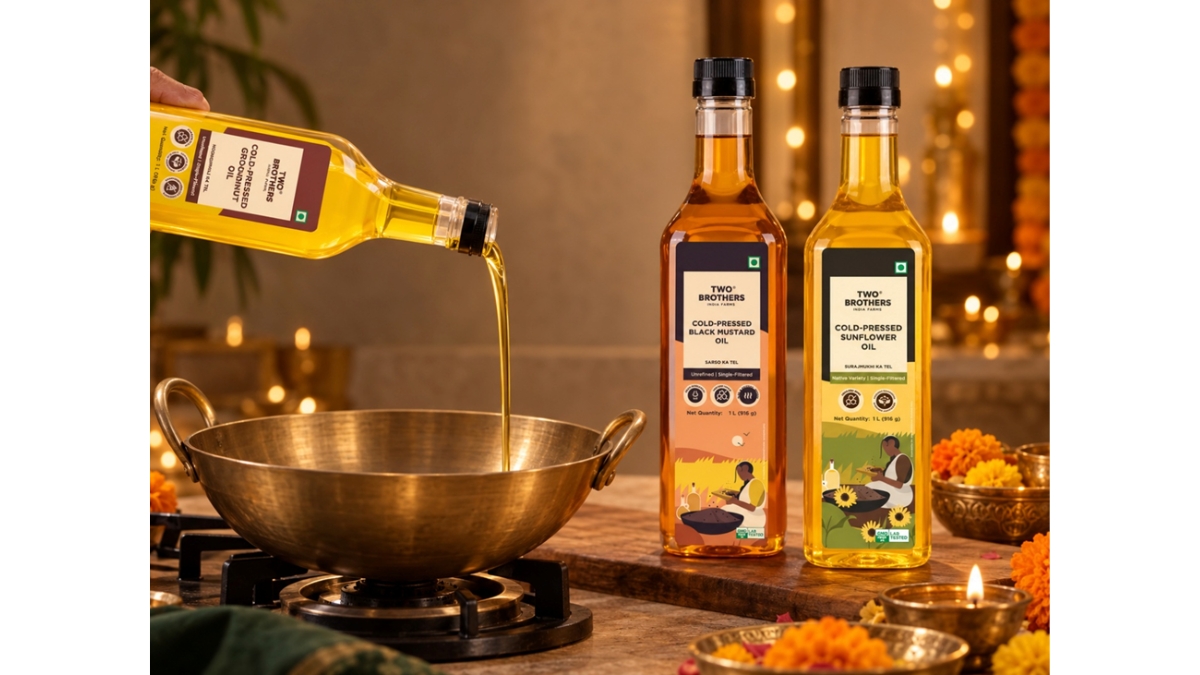
That single line quietly determines more of the festival’s flavour, and more of its health impact, than almost anything else on the list. Oil is the medium in which puris balloon, kachoris crisp and pakoras earn their crunch. It is the base of the tadka, the sizzle that starts a sabzi and the preservative that keeps a pickle safe through winter. This guide explains which oil suits which festive dish, how much you are likely to need, how to fry safely, and how Two Brothers India Farms’ three cold-pressed oils (groundnut, black mustard and sunflower) fit into a festive kitchen.
Why Cold-Pressed Oil Is Different
Much of the edible oil sold in India is refined: extracted with high heat or chemical solvents such as hexane, then bleached, deodorised and filtered into a pale, neutral, long-lasting liquid. Cold-pressed oil is extracted by mechanical pressing at low temperature without solvents, then filtered, sometimes just once. It keeps more of the seed’s flavour, aroma and naturally occurring compounds such as tocopherols, the family that includes vitamin E.
Two Brothers’ groundnut, black mustard and sunflower oils are all single-filtered, hexane-free, free of additives and preservatives, and certified glyphosate-free. The mustard oil is wood-pressed. The trade-offs are honest ones: more flavour, a shorter shelf life than refined oil, some natural sediment and a higher price per litre. In return you get oil closer to its source, made without solvents, from seed that is traceable and tested. And because each oil has its own personality, the art of festive cooking is matching oil to dish.
How Much Oil Does a Diwali Kitchen Use?
Nobody measures oil during a festival, which is why it runs out at the worst time. Break the fortnight into activities. Deep-frying snacks (chakli, sev, mathri, shakarpara, namkeen, kachori) is the biggest: a kadhai needs roughly one to one and a half litres to fry comfortably, and a family making five or six varieties can easily use three to five litres. Festive meals with puris, parathas and rich gravies use less per dish but across several days and more guests. Pickles can use several hundred millilitres a jar. These are planning heuristics, not measurements, but they suggest a family that normally uses a litre or so a fortnight may need two to four times that during Diwali. Estimate generously.
The Three Oils in Your Festive Kitchen
Cold-Pressed Groundnut Oil: The Workhorse
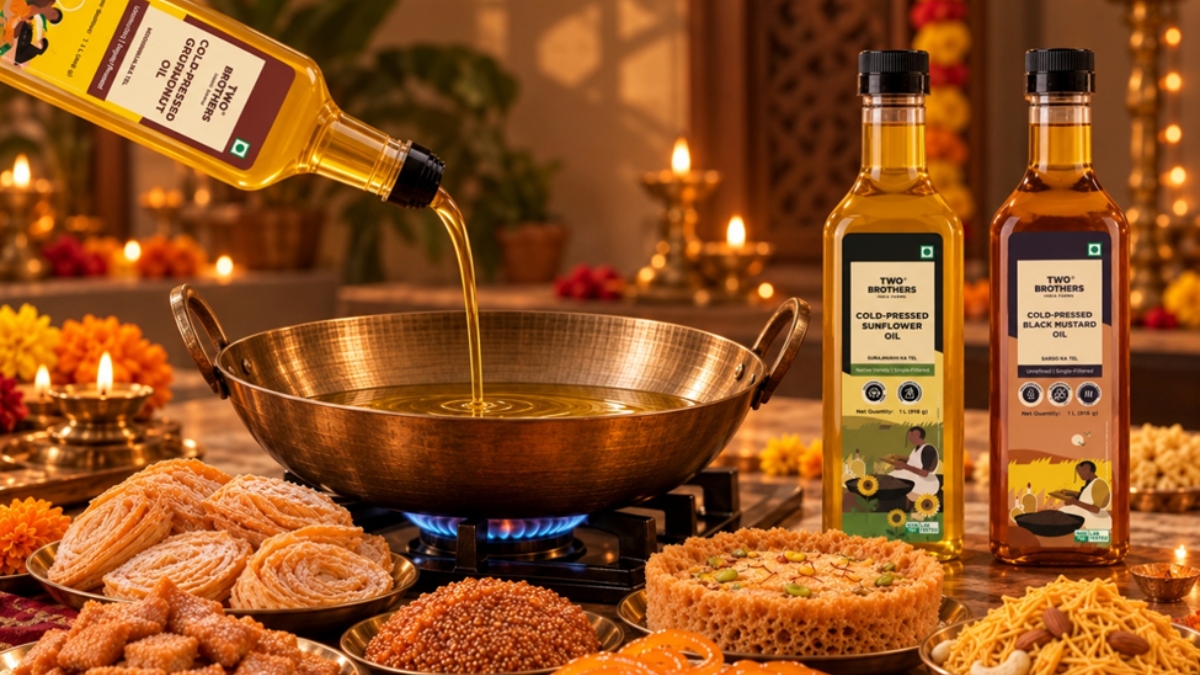
Groundnut oil is the traditional frying oil across much of western and southern India: mild, pleasantly nutty and suited to high heat. Two Brothers’ version is cold-pressed from the native Ghungroo variety, contains tocopherols, monounsaturated and polyunsaturated fats, and is free of trans fats. The product page recommends it for deep frying, roasting, sautéing and tadkas. This is the oil to buy in the largest quantity for puris, kachoris, samosas, pakoras, chaklis, sev and mathri.
It is sold as a 1 litre bottle (₹465), 2 litre bottle (₹850), 2 litre tin (₹895) and 5 litre tin (₹2,015) at the time of writing, and holds a 4.85 out of 5 rating from 646 reviews.
Cold-Pressed Black Mustard Oil: The Specialist
Sharp, pungent and slightly bitter, mustard oil defines whole cuisines, from Punjab’s sarson da saag to Bengali fish curries to the pickles of the north. Two Brothers’ oil is wood-pressed from black mustard seeds sourced from central and northern India, and contains naturally occurring tocopherols and essential fatty acids with a high share of monounsaturated fat. For Diwali it belongs in pickles put up as the weather turns, in saag and makki di roti, in tadkas for kadhi and in regional snacks. Its strong flavour makes it wrong for delicate sweets. Indian regulators have prohibited blending mustard oil with other oils, so a label reading mustard oil should mean pure oil.
It comes in 1 litre (₹425), 2 litre (₹790) and 5 litre tin (₹1,885) packs, with a 4.84 out of 5 rating from 148 reviews.
Cold-Pressed Sunflower Oil: The Everyday Light Option
Sunflower oil is mild and versatile. Two Brothers’ oil is pressed without added heat, is high in omega-6 polyunsaturated fat and contains tocopherols. The brand describes uses from deep and shallow frying to dal and sabzi, dough for parathas and puris, and dressings. It suits sweets that call for a neutral oil, everyday meals through the festival weeks and salads that lighten a heavy table. Because it is rich in polyunsaturated fat, it is not the best choice for repeated frying of the same batch, which is why groundnut takes the heavy frying.
It is sold as a 1 litre bottle (₹445) and a 5 litre tin (₹2,095 list, ₹1,781 sale price at the time of writing), rated 4.86 out of 5 from 84 reviews.
The Dish-by-Dish Guide
- Puris: groundnut, at steady medium-high heat so they puff instantly and absorb little oil.
- Kachoris and samosas: groundnut, starting moderately hot so the filling cooks before the crust colours.
- Chakli, sev, namkeen and mathri: groundnut, for stability across long sessions.
- Pakoras and bhajiyas: groundnut for a classic result, mustard for a sharper regional one.
- Gujiya, balushahi and malpua: groundnut or sunflower, or ghee, which remains traditional for many households.
- Sarson da saag and pickles: black mustard.
- Tadkas: groundnut for an all-purpose nutty tadka, mustard for northern and eastern dishes, sunflower for a light one.
- Parathas: sunflower or groundnut.
- Salads and dressings: sunflower.
A reasonable starter set for a household hosting guests is a 5 litre tin of groundnut, a 2 litre bottle of mustard and a 1 litre bottle of sunflower, with a second groundnut pack if heavy frying is planned.
How to Fry Well
Deep-frying works best between roughly 170°C and 190°C. Too cool and food absorbs oil and turns heavy; too hot and the outside burns before the inside cooks. A small piece of dough dropped in should rise within a few seconds, surrounded by steady bubbles. Fry in small batches so the temperature does not crash, heat oil gradually rather than blasting it, skim burnt bits between batches, and drain well. If oil starts to smoke, lower the heat immediately. Cold-pressed oils keep more natural compounds and can smoke at lower temperatures than heavily refined ones, so watch the pan.
The Reuse Question
Reusing frying oil is one of the least discussed food safety issues in Indian homes. Repeated heating breaks oil down into compounds collectively known as total polar compounds. The Food Safety and Standards Authority of India has set a limit of 25 percent total polar compounds for oil used in commercial frying, and it runs a scheme for collecting used cooking oil for biodiesel. The rule applies to businesses, but the chemistry applies equally at home.
Do not reuse oil that has darkened, smells sharp, foams or smokes at low heat. Reuse lightly used oil once, for shallow frying or tadka, rather than deep-frying again. Never keep topping up old oil with fresh. Do not pour spent oil down the drain. The practical consequence is that if you plan to discard frying oil sooner, you need to buy more of it, so build that into your stock-up.
What the Guidelines Say About Fat
The ICMR-NIN Dietary Guidelines for Indians, released in 2024, recommend that total fat provide no more than about 30 percent of energy, advise limiting saturated fat sources and encourage variety in oils, since different oils supply different fatty acids. A multi-oil kitchen fits that neatly: groundnut for frying, mustard for pickles and regional dishes, sunflower for everyday cooking. But no oil is a health food when eaten in excess, and a festival is when portions balloon. Shallow-fry or air-fry what does not need deep frying, blot fried foods, keep portions of the richest items small and balance the table with vegetables, salads and fibre.
The Glyphosate Question
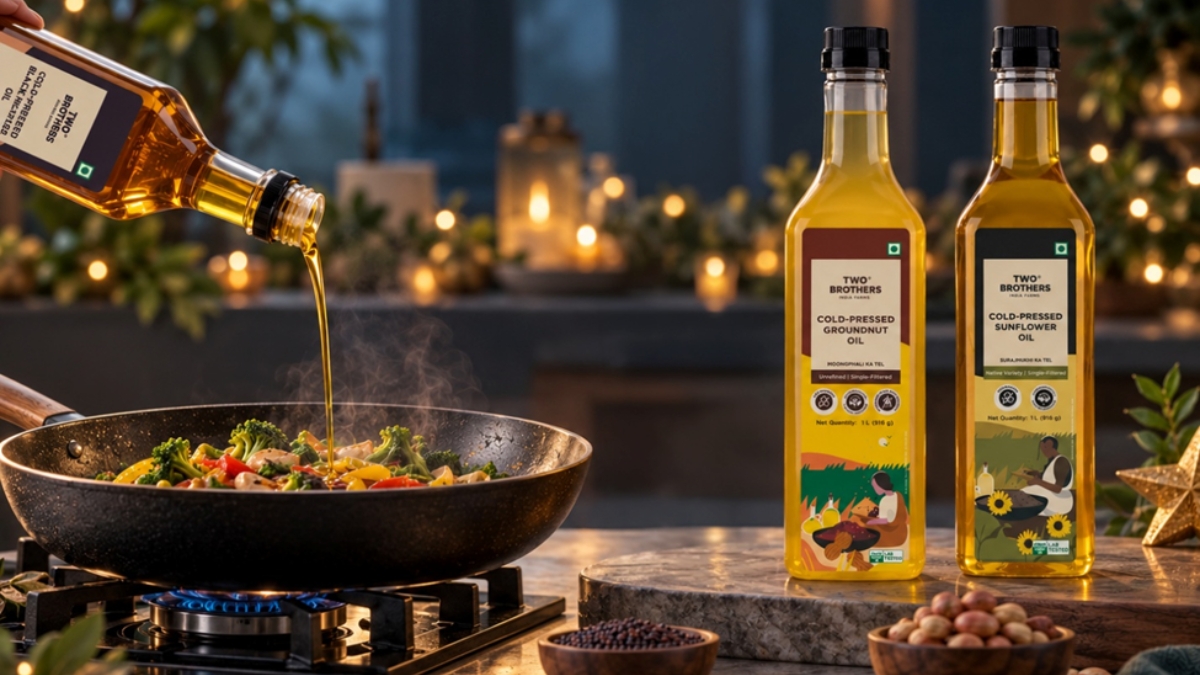
Oilseeds, like wheat, are often grown with glyphosate-based herbicides, and residues can appear in crops and the foods made from them. The World Health Organization’s cancer research agency has classified glyphosate as probably carcinogenic to humans. Two Brothers India Farms has sought independent verification: its oils are certified glyphosate-free, with certificates displayed on the product pages and lab reports available. As co-founder Ajinkya Hange has put it, it is important to test, be open and tell people what is going on. When several generations eat the same food, that transparency is a practical reassurance, not a marketing flourish.
Buying Smart
For frying, buy the tin: the 5 litre groundnut tin works out at roughly ₹0.40 per millilitre against ₹0.43 for the 1 litre bottle. For mustard, used in smaller quantities, the 1 or 2 litre bottle is usually enough. Order a week or more ahead; free shipping applies above ₹1,499 and cash on delivery is available. Keep oil in a cool, dry place away from sunlight and the stove, decant a working quantity into a smaller container and keep the lid tight. Expect natural sediment in single-filtered oil; it is normal. Best-before dates run to a year from packaging (twelve months for groundnut), well beyond the festive season. For gifting, a bottle of cold-pressed mustard oil for a relative who makes pickles, or a set of oils alongside ghee and jaggery, is a gift that gets used, and Two Brothers offers curated hampers.
Frequently Asked Questions
Which oil is best for deep frying Diwali snacks?
Cold-pressed groundnut oil: mild, heat-tolerant and suited to puris, kachoris, chakli, sev and namkeen.
Which oil should I use for pickles?
Black mustard oil, the traditional choice.
Are Two Brothers’ oils refined?
No. They are cold-pressed and single-filtered, with no hexane, additives or preservatives.
Are the oils glyphosate-free?
Yes, all three are certified glyphosate-free.
How much should I buy?
A family of four to six hosting guests and making several fried snacks might plan three to five litres for frying, plus oil for everyday cooking and pickles.
Is it safe to reuse frying oil?
Lightly used oil can be reused once for shallow frying or tadka. Discard oil that has darkened, smells sharp, foams or smokes.
The Oil You’ll Actually Need
Festive cooking consumes more than anyone predicts. Guests stay longer, one more batch is always requested, and the tin that looked generous on Dhanteras is empty by Bhai Dooj. The answer is not to buy the most oil but the right oil for each job.
A well-stocked Diwali kitchen is not measured in litres. It is measured in whether every dish, from the first puri to the last pickle, was cooked in something you would be happy to explain to your guests. Two Brothers India Farms’ groundnut, black mustard and sunflower oils are made for exactly that kitchen: honest oil, cooked with care, for a festival that is meant to be enjoyed.
If you object to the content of this press release, please notify us at pr.error.rectification@gmail.com. We will respond and rectify the situation within 24 hours.
