

New Delhi [India], July 11: Scaler School of Technology (SST) is rapidly emerging as one of the most forward-thinking institutions for engineering education in India. With a strong focus on computer science, artificial intelligence, and robotics, SST is redefining how young engineers are trained—not just in theory, but through consistent, high-impact practice. From industry-driven labs to top internships and sponsored projects, students are immersed in real-world problem-solving from their very first year. In this exclusive Q&A, the Dean of SST, Anshuman Singh, talks to us about how the institution is cultivating the next generation of AI talent for India—one project, one lab, and one startup-ready software developer at a time.
Q: How is SST preparing students for careers in artificial intelligence, machine learning, and robotics?
A: At SST we have developed a curriculum that not only exposes students to AI and ML as buzzwords; we have embedded AI and ML into the students’ learning from the first year itself. Foundational learning covers programming, data structures, algorithms, and mathematics for machine learning. From there, students advance into applied topics such as supervised and unsupervised learning, deep learning, computer vision, and reinforcement learning.
As students progress, they explore cutting-edge areas including transformer architectures, large language models (LLMs), generative AI, and agentic AI systems. We emphasize real-world applications — students build and fine-tune models, train domain-specific LLMs, experiment with prompt engineering, and design agentic workflows.
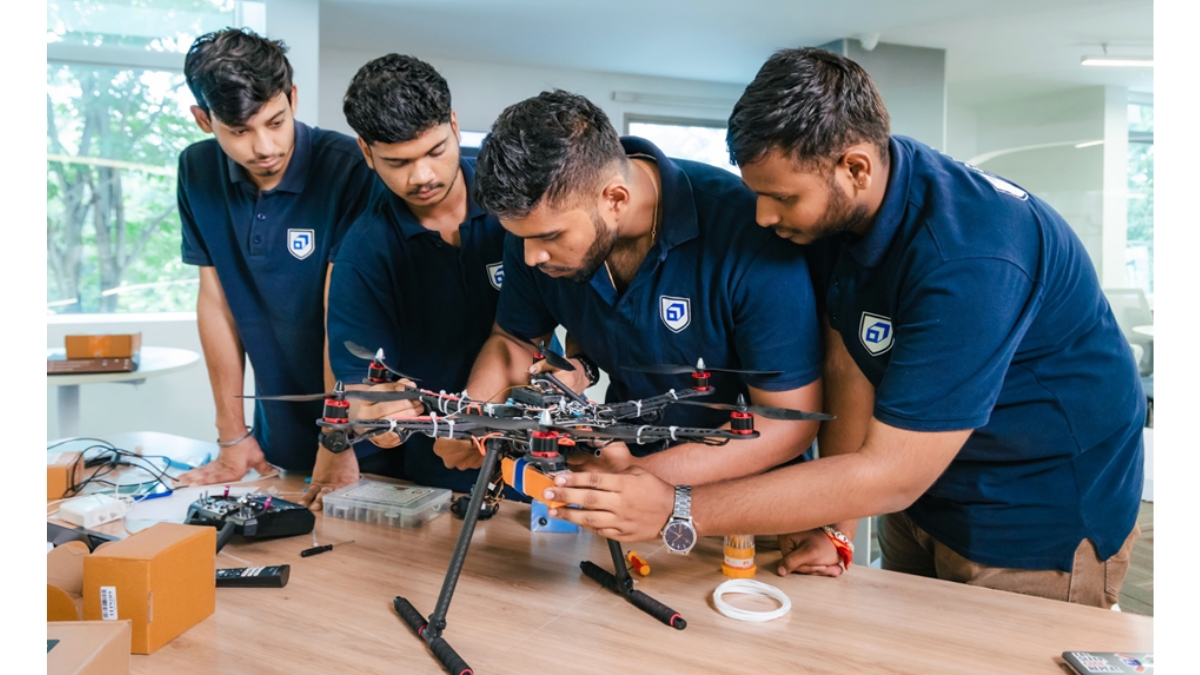
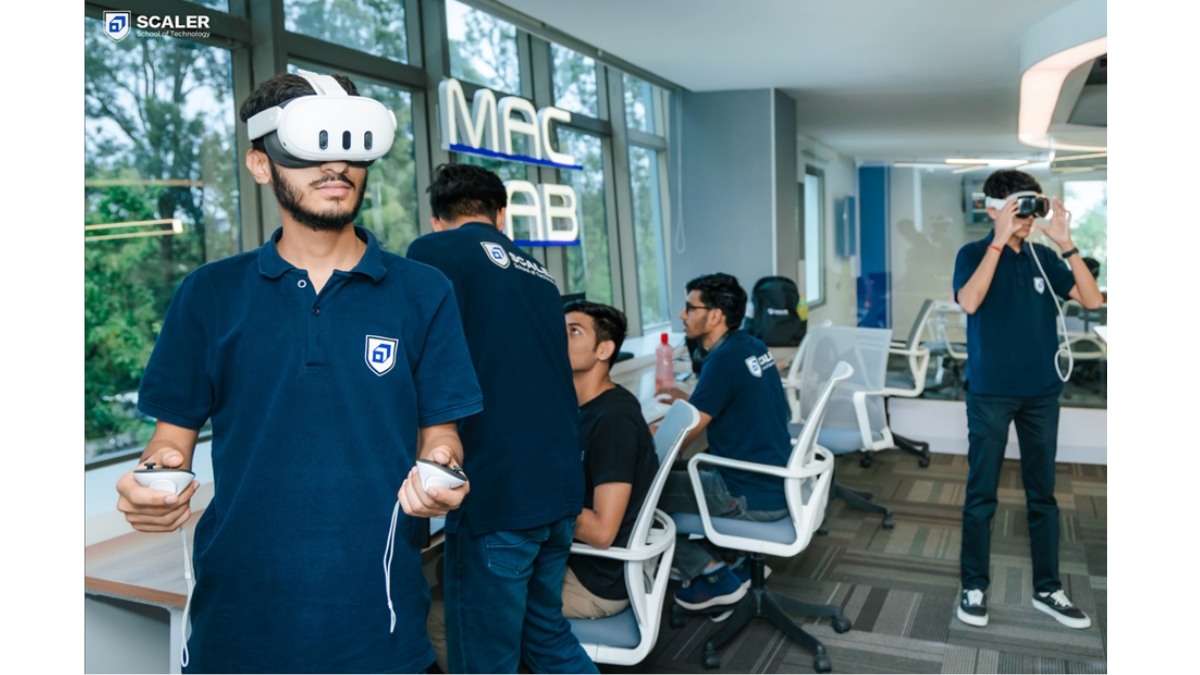
What truly sets us apart is the hands-on product-building approach. Our curriculum, designed in collaboration with 100+ leaders from Google, Meta, Flipkart and more to ensure students don’t just understand models—they build them, tune them, and deploy them. We are not chasing grades; we are seeking production-ready systems. And the same is true of robotics, where students are launching real actuator control, automation workflows, and AI-enabled robotics systems through hands-on labs and collaborations.
Q: You mentioned labs and real projects—can you tell us more about that?
A: Our Innovation Lab is purposefully structured to build real products that solve everyday problems using AI. Whether it’s training models for speech, vision, or language, students are immersed in projects that simulate real engineering environments.
For example, CareCanvas is an AI-powered skincare assistant that personalizes and tracks users’ progress on their skin care routines through smart, data-driven insights. Another is Varia, an AI voice agent made for human-like phone conversations in B2B and fintech applications. While still a work in progress, this demonstrates the level of complexity students are encouraged to tackle.
We also see deep technical work like speech-to-speech translation and gesture-controlled gaming that were built during our AI/ML Build Day. Events like the 48-hour Gahan AI Hackathon lead to rapid prototyping and the opportunity for interdisciplinary teams to collaborate and work on real-world use cases with the pressure of a deadline.
Student ventures have similar ambitions—ranging from platforms enabling lifelike AI avatars for education and entertainment, to apps that simplify healthcare communication, automate grading, or provide personalized learning content. These aren’t just class projects—many are in beta or already have early users.
What makes this ecosystem unique is the year-long Industry Immersion that every student takes part in. Whether they choose to intern, launch their startup, or dive deep into a research project, they gain real experience solving problems at production scale; working with engineers, writing code that actually runs, and learning the process of taking a product from ideation to deployment.
Q: Can you talk about students who’ve benefited from this hands-on learning model?
A: Take an example of Sauhard Gupta, selected for Google Summer of Code (GSoC) 2025, which is a globally competitive program with only about 5% acceptance rate and is usually targeted towards students who are in their senior year or pursuing a post-graduate degree. The Android Virtual Printer Application, one of Sauhard’s projects, is now under review by teams working on Chromium.
But it isn’t just Sauhard that’s outstanding — it’s the ecosystem we have built at SST that prepares students to perform at this level. Open-source mentorship, the guidance for artificial intelligence, along with a culture of peer-led innovation, allows students to take the lead by making work and projects that matter.
Another recent accomplishment is that four of our students have been chosen to attend the Harvard Project for Asian and International Relations (HPAIR) Conference in Tokyo this year. This global platform is prestigious, highly selective, and provides the opportunity for future leaders to interact with policy-makers, entrepreneurs, and academics from around the world.
Q: What role do mentors and industry professionals play in this model?
A: Mentorship is a key aspect of SST. It is also a component that all of our students have access to at SST, mentor relationships with industry experts, the very best, from global players that come from companies such as Amazon, Microsoft, Flipkart, and most of which visit our Bangalore Campus to have offline sessions on site. These industry experts direct the students from SST on project architecture, research directions and careers in AI or Robotics.
We regularly have sessions with “super mentors” like Rajan Anandan (Ex-Microsoft India Head, Ex-Google VP SEA), Bhavin Turakhia (ZETA CEO) and most recently Arvind Neelakantan – one of the founding minds behind GPT-3 and GPT-4, and now a Research Scientist at Google DeepMind. Arvind gave students a rare behind-the-scenes look at real-world AI development. He discussed how AI is transforming engineering, as well as the significance of systems thinking and the need to do things with intention – not just speed. The students were clearly inspired, yet humbled.
Q: How does your model keep up with how quickly AI evolves?
A: Our curriculum evolves fast. Whenever a new architecture model or groundbreaking paper is released, our instructors—many of whom are active software developer professionals—cover it in the next module. Our AI and ML courses are tightly aligned with real industry needs, from LLMs and prompt engineering to deploying pipelines with TensorFlow, PyTorch, Hugging Face, and Kubernetes. By third year, many students aren’t job hunting—they’re already building products, working in research labs, or running startups.The loop between industry demand and academic design is tight and intentional.
Q: Final thoughts on SST’s place in the tech education space?
A: Our goal is to create builders, not just graduates. By second year, SST students contribute to open-source, launch apps, and solve real technical problems. We believe that AI and robotics aren’t just future skills—they’re present-day tools, and our students are already working with them right now. Admissions for the 2025 intake are closing soon. Explore the 4-year undergraduate program in Computer Science and AI at SST: https://scalerschooloftech.com/44XOnRS
If you have any objection to this press release content, kindly contact pr.error.rectification@gmail.com to notify us. We will respond and rectify the situation in the next 24 hours.
