

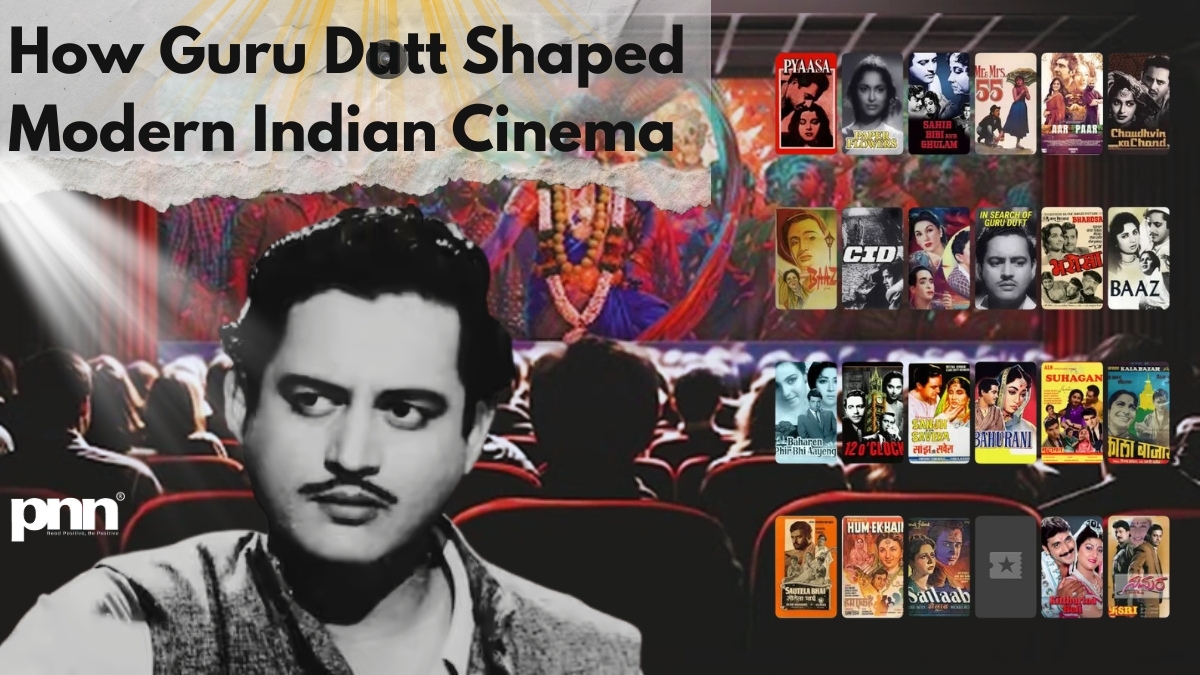
Mumbai (Maharashtra) [India], January 13: In the era when the art of filmmaking was yet to speak its first words, one man made the camera a quill of a poet. Guru Dutt was an actor, director, and visionary who not only made the movies, but also had a path of redefining the way they could appear, feel, and touch the viewers even when the reels had been turned off. The work he is remembered for is not only the tales he narrated, but also the methods that changed the visual and emotional impact of Indian cinema forever.
A Maverick from the Start
Dutt was born Vasanth Kumar Shivashankar Padukone (1925), and the story of his rise to greatness in Indian cinema is as captivating as the movies he directed. It was not only his artistic soul that was extraordinary, but the way in which he applied the soul using the grammar of cinema. His movies, beginning in the 1950s, left behind normal presentation and took a more expressive visual story to marry mood and meaning in a way only a few directors before him had tried to do.
From white-knuckle noir (Baazi 1951) to the sophisticated comedy Mr and Mrs. 55, the early work already served as an indication of Dutt’s technical curiosity. Nevertheless, his collaborations with V.K. Murthy as cinematographer were the periods that actually transformed the industry’s attitude toward light, shadow, and camera movement.
Painting with Light and Shadow.
The core of the technique used by Guru Dutt was a near-painterly play of lighting – the chiaroscuro effect of light and shadow that made memorable frames. These extreme contrast images were not merely beautiful; they addressed the heart of his movies. Either in the flickering streets of Pyaasa or in the reflective aisles of Kaagaz Ke Phool, light was an actor in her own right.
This wasn’t happenstance. The Dutt-Murthy duo played with shadows and highlights in a very accurate way, creating the moods of living poetry. It is one of the reasons why Pyaasa was included in Times magazine among 100 Movies of All Time, a significant award that any director in the world can gain.
CinemaScope and Camera Play
Guru Dutt embraced the use of the wide screen way back before it became standard practice in India. In 1959, he introduced CinemaScope to Indian film with Kaagaz Ke Phool (1959), a radical technical experimentation that broadened the scope of the visual and gave his films an epic quality almost unknown then.
As well, his fondness with close-ups, particularly the longer focal length lenses, became so commonplace that other directors named the technique the Guru Dutt style. These lenses were not merely a matter of style, but the feeling of closeness was expressed through them, dragging spectators into the emotional scenery of his characters.
Songs That Speak through the Camera.
In the films Dutt did not use music as a garnishment. He considered songs to be a part of narrative architecture. He partnered with composers such as S.D. Burman and lyricists such as Sahir Ludhianvi in altering musical sequences into emotional topography by giving scenes that pushed the plot along and enhanced character development.
An example is the haunting Yeh Duniya Agar Mil Bhi Jaaye of Pyaasa or Waqt Ne Kiya Kya Haseen Sitam of Kaagaz Ke Phool. These are not mere pieces of music but rather mental sceneries in a state of flux.
Narrative Techniques with Soul.
In addition to images, Dutt also based his storytelling on his conception that a movie should be alive. Long takes and slow rhythms often made up his style since he preferred giving room to moments, a sharp contrast with the swift editing that was the fashion at the time. This moving rhythm has enabled the spectators to experience the emotions of characters, and not merely observe action.
The combination of the character drive, plot development, and visual effects that Dutt brought, created a film universe in which compassion was not promoted, but weaved into it as an inevitable occurrence.
Influencing Generations
Guru Dutt was influential despite his tragic career being cut short because of a tragic accident. Filmmakers of different generations, such as Satyajit Ray and modern film directors, have to give him a bow in the direction of the techniques that he introduced. His experiments in camera movement, framing and integration of feelings turned out to be educative contents in film schools all over the world.
In fact, film festival comments like the Indian film festival of Melbourne indicate how universally applicable his work is. They are hailing his movies not as a museum item, but as a breathing declaration of what art and technique can do when they go hand in hand.
The Legacy Lives On
When cinephiles are currently revisiting films such as Pyaasa, Kaagaz Ke Phool, and Sahib Bibi Aur Ghulam, it is obvious that the technique is not the only curiosity of Guru Dutt. They were revolutions – ways of enriching the language of Indian cinema and expanding its expressive range.
The influence of Guru Dutt methods still reverberates in the contemporary filmmaking, as it teaches filmmakers to keep in mind that filmmaking is all about the subtle dance of light and movement, sound and feeling, all in an exquisite harmony.
His work stands out to us living in a culture of spectacle, where depth, nuance and soulful precision are eternal. It is the real heritage of a genius who did not only film movies, but taught people how to feel movies.
If you object to the content of this press release, please notify us at pr.error.rectification@gmail.com. We will respond and rectify the situation within 24 hours.
