

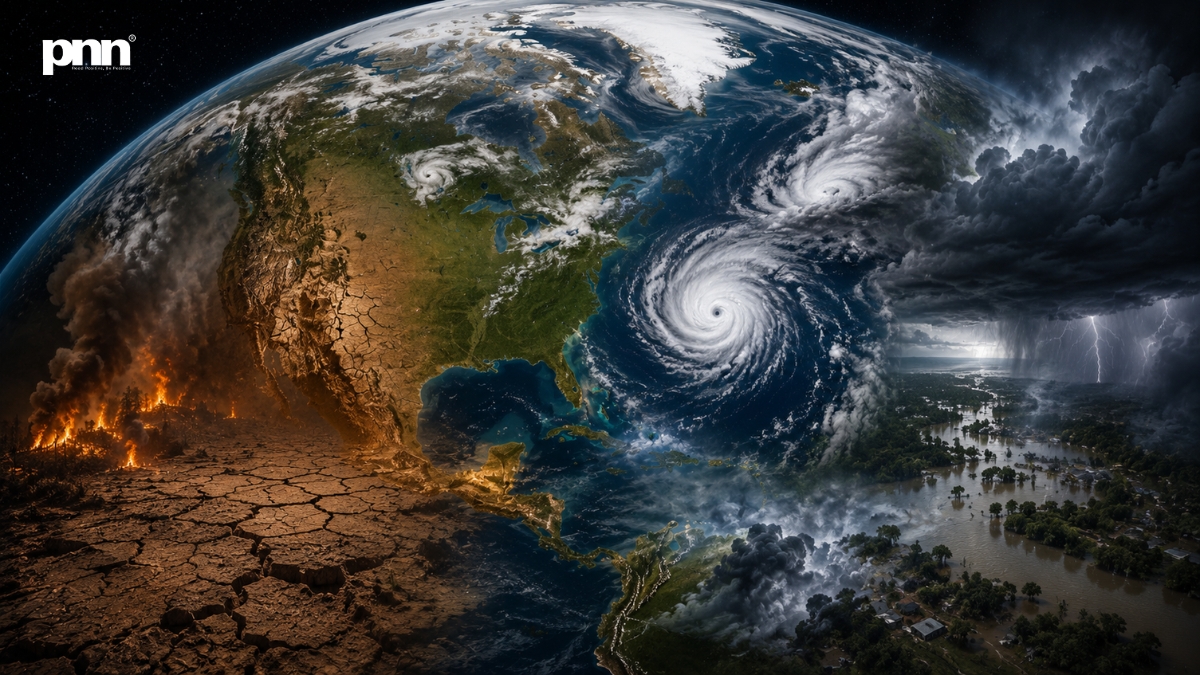
Mumbai (Maharashtra) [India], July 4: The planet has an uncanny habit of reminding humanity who’s actually in charge. One year it’s record-breaking heat, another it’s devastating floods, followed by droughts that seem determined to rewrite farming calendars. Now, El Niño, just as many regions continue recovering from previous climate extremes, another familiar guest has officially returned. Its name isn’t new. Its timing isn’t surprising. But its impact could once again be impossible to ignore.
The World Meteorological Organization (WMO) has officially confirmed that a new El Niño event is underway, with forecasts suggesting it could strengthen between July and September. Scientists warn that the phenomenon may intensify heatwaves, droughts, excessive rainfall, and flooding across different regions of the world over the coming months.
Unlike a hurricane or cyclone, El Niño doesn’t make headlines because it suddenly appears on satellite imagery. It quietly alters ocean temperatures, shifts atmospheric circulation, and then proceeds to remind continents that weather rarely respects national borders.
Apparently, even the climate has decided that unpredictability is trending.
When The Pacific Changes, The World Notices
El Niño begins thousands of kilometres away in the equatorial Pacific Ocean, where unusually warm sea surface temperatures disrupt global weather systems. While the phenomenon originates in one region, its consequences stretch across continents, influencing rainfall, agriculture, temperatures, and even economic activity.
Historically, strong El Niño years have been associated with:
- Higher global average temperatures.
- More frequent heatwaves.
- Drought conditions in parts of Asia and Australia.
- Heavy rainfall and flooding across sections of the Americas.
- Pressure on agriculture and water resources worldwide.
Scientists emphasise that El Niño itself isn’t caused by climate change, but a warming planet can amplify many of its effects, making extreme weather even more severe.
A Climate Pattern With A Long Memory
El Niño is hardly a newcomer.
Meteorologists have studied the El Niño–Southern Oscillation (ENSO) for decades, recognising it as one of Earth’s most influential natural climate cycles. Some of the world’s warmest years have coincided with strong El Niño events, including the record-breaking temperatures witnessed during recent years.
The WMO’s latest outlook suggests the current event could continue strengthening through the Northern Hemisphere summer, prompting governments and disaster-management agencies to prepare well in advance.
Forecasting has improved considerably compared to previous decades.
Unfortunately, forecasting isn’t the same as preventing.
The Economic Ripple Effect
Extreme weather rarely stops at weather.
Agriculture, insurance, energy production, transportation and food supply chains often feel the consequences long before ordinary consumers realise what’s happening.
Potential impacts include:
- Reduced agricultural yields in drought-prone regions.
- Higher food prices due to disrupted harvests.
- Pressure on electricity demand during prolonged heatwaves.
- Greater flood-management costs for governments.
- Insurance losses linked to climate-related disasters.
According to international estimates, major El Niño events have historically contributed to hundreds of billions of dollars in global economic losses, particularly when multiple regions experience simultaneous climate disruptions.
Nature rarely sends invoices.
The economy usually collects them later.
There Is A Positive Side To Better Preparation
Unlike sudden natural disasters, El Niño provides something valuable.
Time.
Because scientists can monitor ocean temperatures months in advance, governments now have greater opportunities to prepare emergency responses, strengthen water management, advise farmers and improve disaster readiness.
Recent advances in climate modelling, satellite observation and international cooperation allow weather agencies to issue increasingly accurate seasonal forecasts.
Preparation doesn’t eliminate risk.
It simply reduces surprise.
The Challenges Are Growing More Complex
Climate experts continue debating how rising global temperatures may influence future El Niño cycles.
While individual events remain part of Earth’s natural variability, warmer background temperatures can intensify heat extremes and increase the atmosphere’s capacity to hold moisture—potentially contributing to heavier rainfall in vulnerable regions.
At the same time, rapidly growing urban populations mean more people now live in areas exposed to flooding, water shortages, and extreme temperatures than during previous El Niño episodes.
In other words, the weather hasn’t necessarily become more political.
Human infrastructure simply has more at stake.
More Than A Seasonal Forecast
The WMO’s announcement isn’t merely another weather bulletin.
It serves as an early reminder that climate resilience is becoming as important as climate prediction. Governments, businesses, and communities increasingly rely on seasonal forecasts to manage everything from crop planning and water storage to emergency response and public health.
Whether this El Niño develops into a particularly strong event remains uncertain, but preparation has already begun across multiple sectors.
Perhaps that’s the most significant lesson.
The world’s biggest climate challenges rarely arrive without warning.
The real question is whether humanity finally listens before the forecast becomes tomorrow’s headline.
