

Indore [Madhya Pradesh, India], october 16: When several children in the same classroom struggle to read, how do we know which child needs better reading instruction and which child may have dyslexia or a Specific Learning Disorder?
That question is especially important in India, where poor reading performance is common. ASER 2024 reported that only 27.1% of rural children in Standard III could read a Standard II-level text, while the figure for Standard V was 48.8%.
This means one thing very clearly: poor reading alone cannot diagnose dyslexia.
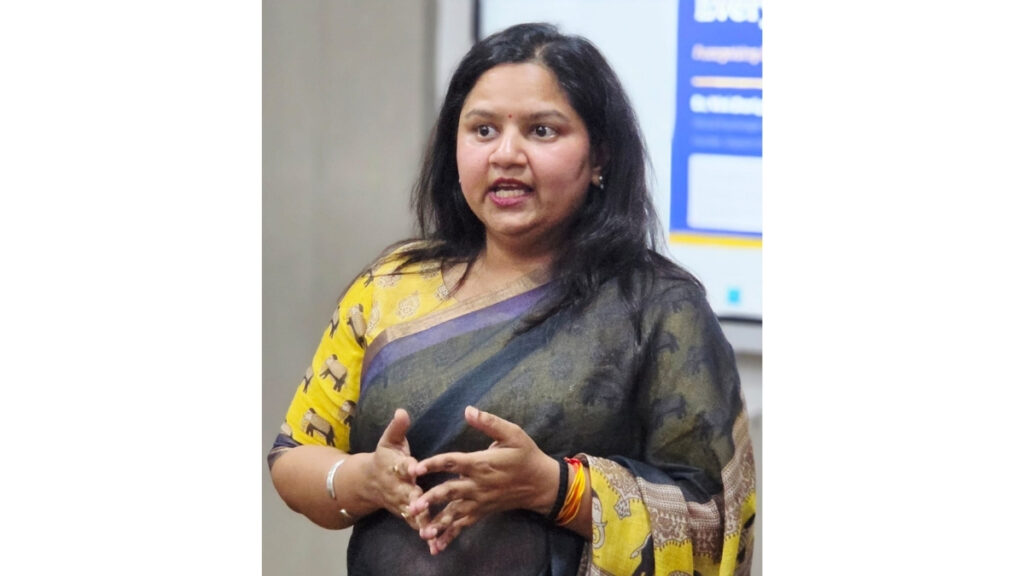
“When reading difficulty becomes common in a classroom, a child with dyslexia can easily hide in plain sight,” says Dr. Vini Jhariya, RCI Registered Clinical & Child Psychologist and Founder of Urjasvini Child Development Centre and Urjasvini Special School, Indore. “The important question is not only whether the child is behind. We need to understand *why* the child is behind.”
Dr. Jhariya has worked with more than 5,000 children and families over 12+ years, with clinical work spanning child development, psychological assessment and learning difficulties.
What Is Dyslexia?
-The*World Health Organization’s ICD-11, classifies dyslexia under Developmental Learning Disorder with impairment in reading (6A03.0).
Children may show persistent difficulty with areas such as word-reading accuracy, reading fluency and comprehension. But before identifying a developmental learning disorder, clinicians also need to consider other explanations, including inadequate educational opportunity, broader intellectual difficulties, sensory problems and language proficiency.
That distinction is critical.
“A child who has not been taught reading systematically can look dyslexic. A child who is still acquiring English can look dyslexic. A child with attention or language difficulties may also struggle academically,” Dr. Jhariya explains.
Reading difficulty is a symptom. Dyslexia is one possible explanation.
That is why screening and diagnosis are not the same thing.
India May Be Facing Two Reading Problems at Once
– Research suggests that Specific Learning Disorders affect a meaningful proportion of Indian children, with a 2023 systematic review and meta-analysis estimating pooled prevalence at approximately 8%.
That does not mean every child who reads below grade level has dyslexia.
“If 20 children in one classroom are struggling with reading, it would be clinically incorrect to assume all 20 have dyslexia,” says Dr. Jhariya. “Some may need better instruction. Some may have experienced interrupted learning. Others may have language, attention or developmental difficulties. Within that group, however, there may also be children with a genuine Specific Learning Disorder.”
This is the diagnostic challenge Indian schools and parents frequently miss
– Poor Reading Does Not Automatically Mean Dyslexia
A useful first question is:
Has the child had an adequate opportunity to learn?
Consider two children who both read slowly.
One has received inconsistent instruction and has never been systematically taught how sounds connect with written words.
The other has attended school consistently, received appropriate teaching and additional help, yet continues to struggle disproportionately with decoding, spelling and fluent word recognition.
- Their report cards may look similar.
- Their needs may be completely different.
- This is why simply adding more tuition is not always the answer.
Dyslexia in Hindi and English: Why Language Matters
Many Indian children develop literacy in more than one language.
A child may speak Hindi at home, study primarily in English and learn to read both Roman and Devanagari scripts.
That makes dyslexia assessment in multilingual Indian children more complex.
Indian researchers developing the DALI-DAB — Dyslexia Assessment for Languages of India recognised this issue and developed assessment approaches across English, Hindi and Marathi.
“We should be careful about calling an English-medium child dyslexic simply because English reading is weak,” says Dr. Jhariya. “We need to understand the child’s exposure to English, oral-language ability, educational history and reading in the other languages the child has actually been taught.”
Difficulty in both Hindi and English may be clinically meaningful, but it must still be interpreted in the context of teaching and language exposure.
One Important Clue: What Happens After Good Teaching?
Another useful question is how the child responds to structured, evidence-based reading instruction.
Structured Literacy approaches involve explicit, systematic and cumulative teaching of important components of reading and writing, including phonological skills, sound-symbol relationships, spelling patterns, vocabulary, morphology and comprehension.
“Extra tuition and structured intervention are not necessarily the same thing,” Dr. Jhariya says. “Repeating more of what the child already does not understand can simply create frustration.”
For parents, the better question is not:
How many months of tuition has my child taken?
It is: ?
What was taught, how was it taught, and did the child’s reading skills actually improve?
Dyslexia Is Not an Intelligence Problem
A child with dyslexia may be intelligent, articulate and capable of understanding complex ideas.
Some children understand a story very well when somebody reads it aloud but struggle significantly when asked to read the same material independently.
“Parents often tell me, ‘My child understands everything, so why can’t he read this paragraph?’ That difference itself can give us useful clinical information,” says Dr. Jhariya.
Cognitive assessment may form part of a comprehensive evaluation, but an IQ score alone neither confirms nor rules out dyslexia.
There Is No Medicine That Cures Dyslexia
Dyslexia is not treated with memory tonics, tablets or syrups.
Effective intervention involves skilled, explicit and systematic literacy instruction, adjusted to the child’s current learning level and progress.
The objective is not simply to make the child practise harder.
“The child needs to be taught differently and precisely,” Dr. Jhariya says. “Good intervention identifies what is missing and teaches those skills step by step.”
When Should Parents Consider a Dyslexia or SLD Assessment?
Parents may consider a formal dyslexia or Specific Learning Disorder assessment** when several of these difficulties persist despite appropriate schooling and support:
- Reading remains unusually slow, effortful or inaccurate.
- The child understands much more when material is read aloud.
- Decoding unfamiliar words remains difficult.
- Spelling is persistently weak or inconsistent.
- Reading and spelling show little progress despite targeted teaching.
- Similar difficulties appear across languages the child has been adequately taught.
- There is a family history of persistent reading or spelling difficulty.
- Academic effort is very high compared with the progress achieved.
None of these signs alone diagnoses dyslexia.
Together, however, they may indicate that a detailed assessment is needed.
What Should a Proper SLD Assessment Examine?
Parents looking for a dyslexia assessment in Indore, SLD assessment, or learning difficulty assessment for a child should expect more than a short reading checklist.
A Quick Parent Check
–If you are concerned about your child’s reading, ask:
- Has my child received regular and appropriate instruction?
- Is reading still significantly harder than expected?
- Does my child understand much better when someone else reads aloud?
- Has repeated tuition produced much less progress than expected?
- Has the difficulty persisted over time?
If several answers are yes, a professional assessment may help clarify why the child is struggling.
About Dr. Vini Jhariya
Dr. Vini Jhariya** is an RCI Registered Clinical & Child Psychologist (CRR No. A70412), TEDx Speaker, and Founder & Clinical Director of Urjasvini Child Development Centre and Urjasvini Special School, Indore. With 12+ years of experience and work with more than 5,000 children and families, her clinical work includes psychological and developmental assessment, child and adolescent mental health, learning difficulties and Specific Learning Disorder assessment.
Note
This article is intended for parent and teacher awareness and should not be used to diagnose dyslexia or Specific Learning Disorder without an appropriate professional assessment.
