

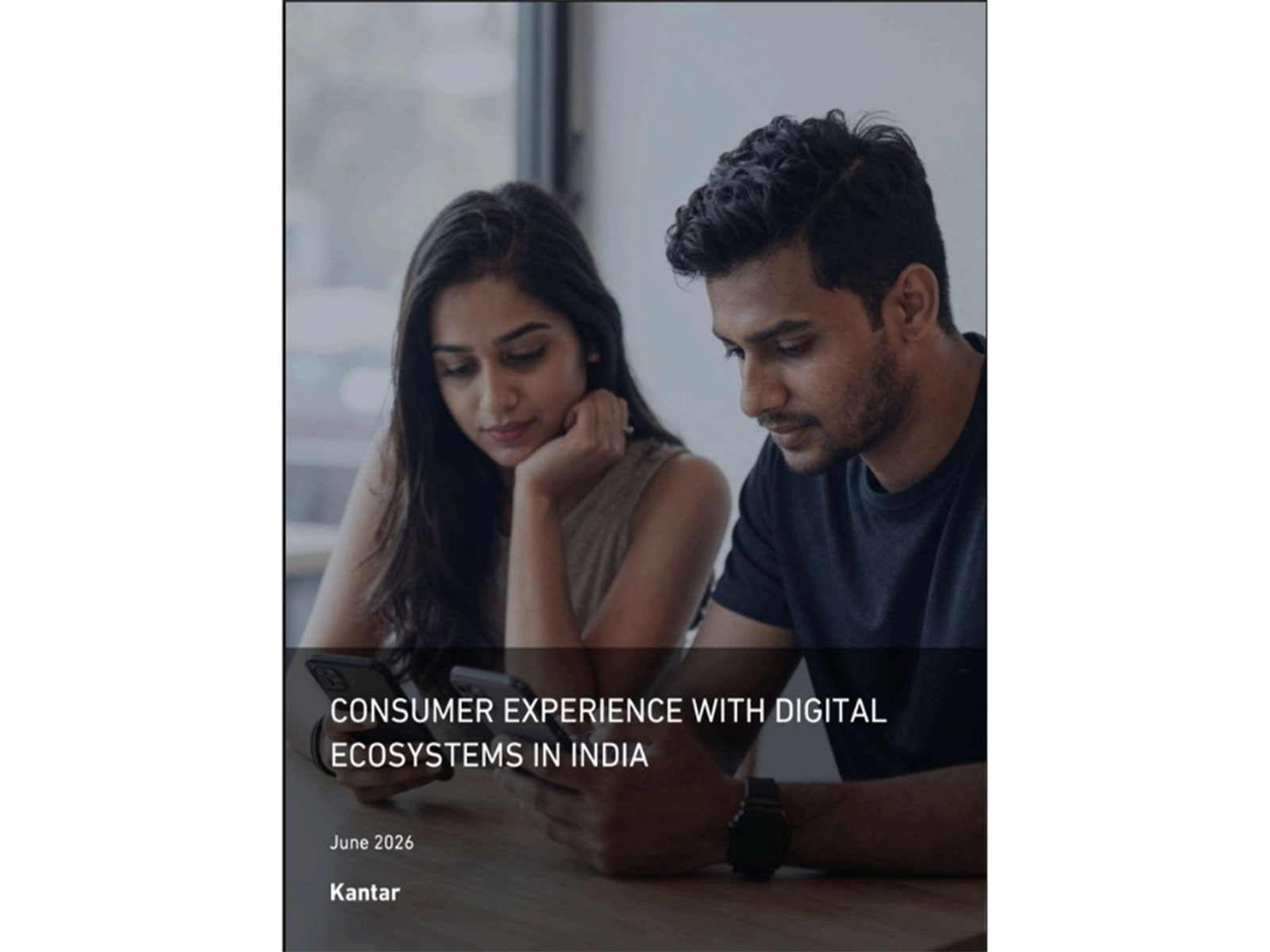
New Delhi [India], June 23: As India’s digital economy scales, a group of Indian companies commissioned a first-of-its-kind consumer survey with Kantar to understand how people experience today’s digital ecosystem, and whether platform practices shape consumer choice and competition.
Based on responses from 500 urban, digitally active users across India, the survey suggests that a small number of platforms increasingly shape how consumers search, communicate, navigate, store information, and access digital services. It also points to consumer concerns around switching between services, visibility of alternatives, pricing, and the growing influence of integrated digital ecosystems.
Beyond competition and consumer outcomes, these patterns also raise broader questions about resilience and dependence in digital markets. The survey indicates that several of the digital services used most frequently by respondents are concentrated among a small number of global platforms. As digital services become more deeply embedded in everyday life, this concentration may increasingly influence not only consumer outcomes, but also innovation, market access, and longer-term technological capability for India.
Commenting on the findings, Mr. Murugavel, Founder and CEO, Bharat Matrimony, said, “As a founder who has spent over two decades building a consumer internet business in India, I firmly believe that India has the talent and ambition to build its own thriving homegrown platforms at par with global ones. The survey findings highlight why that remains such a challenge. Consumers are not the beneficiaries of concentration. They are paying the price through higher costs, limited portability of their data, and fewer meaningful choices. For entrepreneurs, when a handful of global platforms control discovery, app store visibility, and default placement, even the best Indian products struggle to reach users. It is not that consumers do not want alternatives, they just find it difficult to find them and harder to switch to.”
Echoing Mr. Murugavel’s sentiments, Mr. Snehil Khanor, Founder, Truly Madly, said “India’s digital ecosystem cannot thrive on talent alone when critical gateways are controlled by a few. This is where regulation that levels the playing field by curbing unfair practices becomes important. We need to give Indian founders a fair chance to compete and consumers the homegrown innovation and choice they have clearly said they want.”
Market Concentration Across the Digital Stack
- Within the survey sample, usage patterns suggest near-universal usage of a single provider across foundational services:
- 100% of respondents use Google for search and personal email, and 98% for web browsing via Chrome.
- 97% use Google Maps for navigation and 96% use Google Drive for cloud storage.
- For video communication, the most used apps are WhatsApp (94%) and Google Meet (77%).
These patterns suggest that, for this sample, day-to-day digital activity is anchored to a narrow set of incumbents.
High Switching Costs May Entrench Incumbents
While integrated ecosystems offer convenience, respondents who had attempted to switch reported practical barriers to exit:
- 55% report difficulty transferring data across platforms.
- 48% say having contacts on another platform made switching harder.
- 35% report losing access to prior purchases or subscriptions when switching.
Nearly 42% respondents said that they find integrated ecosystems limiting or prefer to avoid them, highlighting a trade-off between usability and autonomy.
Self-Preferencing and Platform Gatekeeping
The survey points to widespread consumer awareness of platform promotion:
- 82% report frequently noticing platform-owned products or services promoted in search results, recommendations, or app stores.
- 76% report features or accessories working better within the same brand ecosystem.
- 64% report receiving suggestions to buy additional products from the same company.
- Only 4% report experiencing none of these behaviours.
This suggests that many consumers perceive large platforms as occupying a gatekeeping position that may influence discovery and consumption patterns within their own ecosystems.
Implications for Pricing and Consumer Welfare
Consumer awareness of app store commissions is high. Many consumers also associate these commissions with higher prices.
- 85% are aware that app stores charge developers high commissions
- 95% believe app store commissions increase the prices consumers pay for apps and digital services.
- 60% report experiencing large tech companies offering free or cheap services initially before raising prices significantly, with a further 33% reporting this sometimes.
These findings reflect consumer concerns that market power in digital ecosystems may translate into higher long-term costs.
Barriers to Entry for Indian Alternatives
Despite rising policy focus on digital sovereignty and domestic innovation, respondents see structural barriers to adopting Indian alternatives:
- 57% attribute foreign app dominance to network effects (existing user bases).
- 62% point to first-mover advantage and stronger visibility in search and app stores.
- 58% say they would consider switching if data could transfer smoothly, and 55% if Indian apps were easier to find in search and app stores.
Notably, only 38% felt Indian alternatives were not as good, suggesting the gap is perceived as structural rather than a matter of product quality.
AI-Led Consolidation: A Possible Next Phase
The emergence of AI-driven interfaces may further entrench incumbent advantages:
- 45% of respondents use pre-installed AI assistants (such as Siri, Google Assistant, or Alexa) either primarily or alongside other options, and only 16% report switching away from the default.
- 87% say they typically rely on the AI-generated answer shown in search and find it usually sufficient, rather than clicking through to external websites, raising questions about traffic to independent publishers and how AI-mediated discovery may shape competition.
Policy Implications: The Case for Ex-Ante Regulation
The findings come as India considers the Digital Competition Bill, which proposes a shift from reactive (ex-post) enforcement to proactive (ex-ante) regulation for large digital gatekeepers. Measures under consideration include restrictions on self-preferencing, mandates for interoperability and data portability, and limits on anti-competitive bundling that are increasingly discussed as tools to support competition in digital markets and safeguard consumer choice.
Outlook: Competition as a Consumer Imperative
The survey indicates consumer alignment with pro-competition outcomes:
- 86% expect improved quality and innovation with more competition.
- 66% want easier switching without losing data.
- 58% anticipate lower prices.
The survey is intended as a first probe – a dipstick – focused on a digitally active, higher-engagement consumer segment. The patterns identified are strong enough to warrant deeper and larger-scale examination across broader consumer groups. As India’s digital economy continues to scale, the broader challenge for policymakers will be ensuring that growth and convenience do not come at the cost of competition.
If you object to the content of this press release, please notify us at pr.error.rectification@gmail.com. We will respond and rectify the situation within 24 hours.
