

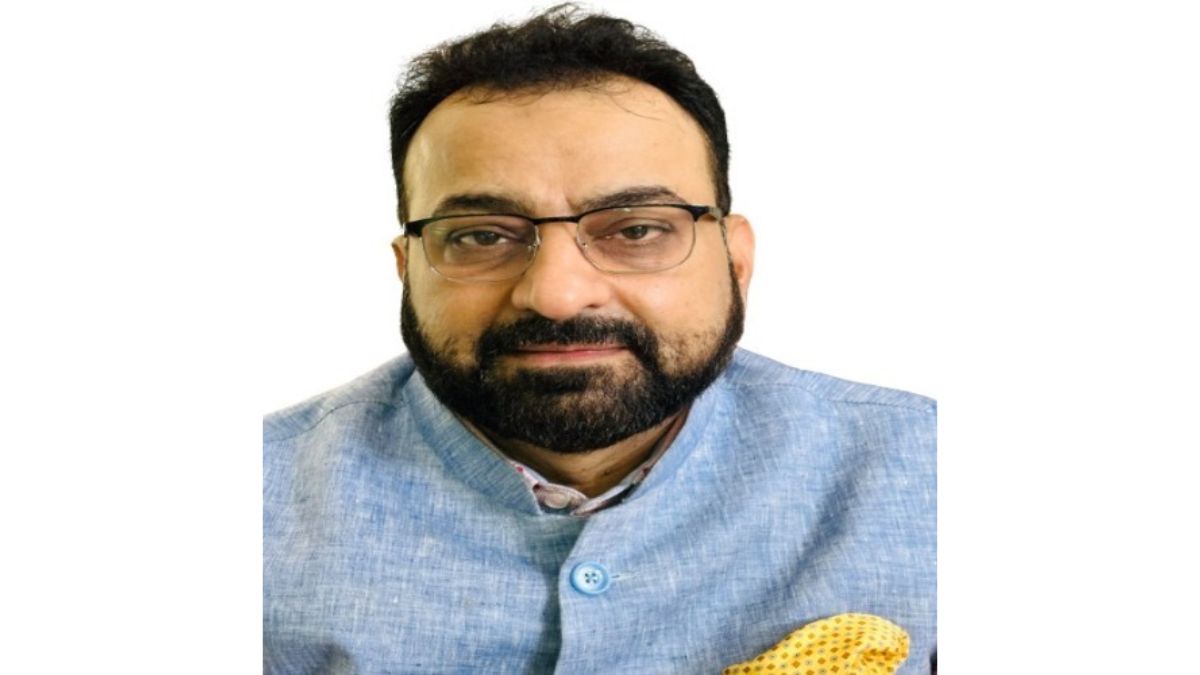
Dr. Arvind Kumar, President, India Water Foundation
The current global order is facing various overlapping crises, which are collectively being described as the poly-crisis era. Given this situation, New Delhi finds itself at a very significant moment, more so after the wars in the Middle East and the ongoing Ukraine-Russia war, when the traditional international security mechanisms are gradually becoming obsolete. India, being a major power with its GDP rising to US$4.18 trillion, seems to be the centre of global politics; it should maintain a low profile and also do some courageous acts to preserve its strategic autonomy, besides ensuring the creation of a peaceful and stable internal environment, if it wants to be free of the geopolitical mess.
The Energy and Resource Frontier
India is confronted with one of the most difficult threats to its energy security because it depends on imports for more than 80 percent of its crude oil and natural gas needs. The blockade of the Strait of Hormuz, together with the interruption of the Middle Eastern supply chains, has rapidly contributed to the destabilization of the local markets. So, New Delhi has taken a move towards large-scale diversification. Despite India’s main source of energy being Gulf energy imports, the country’s crude oil imports from Russia increased from 2-3 percent of total imports in 2021 to 38-41 percent by 2024, indicating a twentyfold rise in the share of Russian crude imports within three years. One way of cutting the dependency on imported fossil fuels is by generating more renewable energy. At the beginning of 2026, India had 275 GW of power capacity from non-fossil sources, which gave it the ability to augment the non-fossil power capacity by 50 percent. Besides, India is forming strategic partnerships with Africa and Australia for liquefied natural gas and critical minerals, while at the same time, it is building up its strategic petroleum reserves.
Food Security and Internal Resilience
The agricultural sector currently operates its first simultaneous period of operational difficulties because its food prices depend on imported fertilisers. The transportation routes used to deliver these fertilisers face disruption because ocean shipping paths follow unpredictable patterns. The government promotes bio-fertilizers and precision agriculture as methods to enhance grain production. The two initiatives today hold special importance for India, which stands as the thirteenth most water-stressed country according to the Aqueduct index of the World Resources Institute. The domestic economy of the nation serves as the primary shield that protects the country from all forms of foreign economic interruptions. India retains its status as the world’s fastest-growing major economy with a development prediction of 7.4 percent. The government plans to create a fiscal defence system against imported inflation and external capital flow changes by reducing the fiscal deficit to 4.5 percent and implementing structural reforms through the second phase of the Goods and Services Tax (GST).
India’s current strategic tightrope in the ongoing global turmoil is illustrated in the following infographics, which are self-explanatory.
The Diplomatic Balancing Act
From a diplomatic point of view, India’s ‘multi-alignment’ strategy is being challenged by the increasing competition between the two superpowers. Washington has put a lot of pressure on India, even threatening to impose reciprocal tariffs and sanctions in connection with India’s purchase of Russian energy and defence equipment. Yet, New Delhi has not backed down and, in fact, changed the lens of its relations to focus on domestic developmental needs instead of ideological loyalties. Such a delicate balancing act is not only in the Middle East, where India has a ‘Special Strategic Partnership’ with Israel on one side, and at the same time, on the other side, it also signed long-term contracts with Iran for the Chabahar Port. This kind of flexibility gives India the ability to be a reliable interlocutor at fault lines in the different regions.
Sustainable Path Forward
India needs to stop watching from the sidelines because its survival depends on becoming an active peace promoter by protecting its economic growth from external disruptions by increasing its essential role in worldwide value chains and modernizing its domestic production sites. New Delhi views strategic autonomy as an essential survival strategy, which became necessary when the world began to fracture into multiple factions.
Disclaimer: Views expressed above are the author’s own and do not reflect the publication’s views.
